

As Google steps into a new year, the tech giant’s chief executive made an intriguing remark about the new direction they are headed. In a new video clip making the rounds on social media, Sundar Pichai spoke about the importance of taking a different approach to AI architecture. Instead of focusing on the orthodox model structure, Pichai wants to upgrade the company’s Gemini models.
Given that most LLMs available in the market are autoregressive in nature, there has been significant buzz regarding the need to push for diffusion models. Their multimodal capability within the diffusion paradigm ensures that the output from LLMs is more organic and more stable when sifting through and processing information. Google’s upcoming plans to restructure their AI’s architectural qualities would, thus, become a crucial factor in their position in the AI race.
Sundar Pichai aims to push for diffusion models in AI architecture
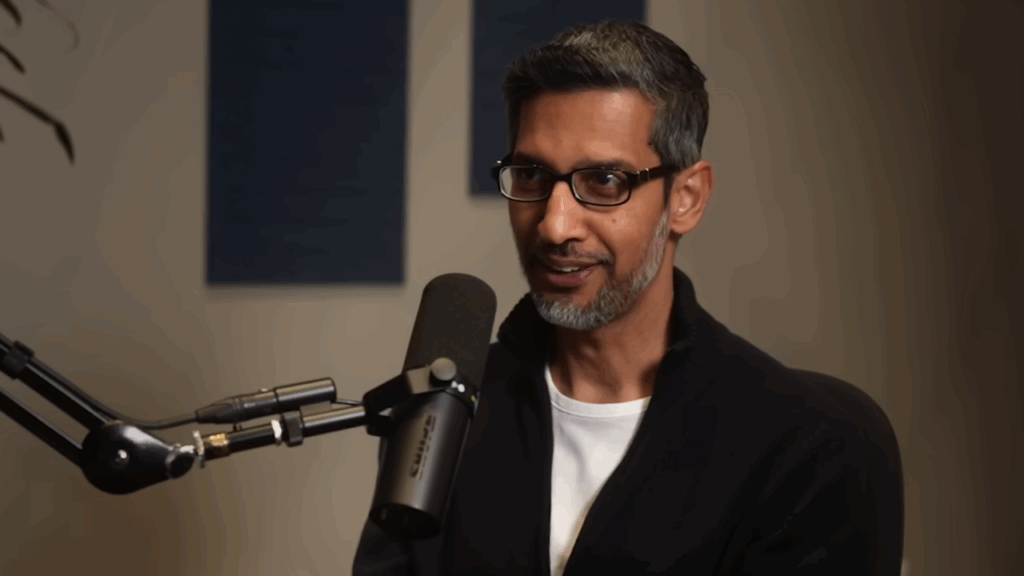
On January 1, user @ForwardFuture posted a video on X featuring a snippet of an interview with Google CEO Sundar Pichai. In the course of the interaction, Pichai stated that it is imperative that the tech giant prioritizes moving to a diffusion paradigm for their Gemini models.
Since current models are autoregressive, LLMs tend to produce outputs in response to the instructions in prompts. They are programmed to predict the next token and provide the data required by the user(s) accordingly. Pichai stated, “We’re going to push the diffusion paradigm as hard as possible.”
The Google chief further spoke of the importance of diffusion models. He said, “All of today’s mainline Gemini models are autoregressive. Diffusion is a different paradigm.” Highlighting the effective functionality of the alternative, Pichai continued, “For the same capability, diffusion can be much faster.” He added, “It’s behind the mainline models today, but there will be areas where it’s the right tool.”
By campaigning for a kind of model that is able to improve upon feedback and provide coherent output as it incorporates new information in its learning process, Pichai’s hope to welcome the diffusion paradigm in the mainline Gemini models will mark a sharp departure from the market trends. The implementation of pluralism to such a degree could pave the way for greater advancements in AI technology.
Related: Elon Musk Intrigued by Google CEO Sundar Pichai’s Plans for Data Centers in Space
Netizens share positive views on AI architectural pluralism
Many X users expressed astonishment at Google chief Sundar Pichai’s plan to incorporate the diffusion paradigm into their mainline Gemini models. Taking to X user @ForwardFuture’s post featuring Sundar Pichai’s aforementioned interview, many commented on the remarkable decision of implementing the diffusion models to boost the productivity levels of the company’s LLMs. One user in particular seemed impressed by Pichai’s farsightedness in the AI tech market.
Although most of the comments celebrated the innovative idea put forth by the Google chief, some users did express skepticism regarding the plan. A number of netizens stated that while aiming for pluralism in AI architecture is a brilliant move, relying entirely on the same could create some challenges in the long run.
As Google endeavors to welcome new innovations in AI tech, the financial market will also be prepared for major breakthroughs as AI companies finally decide to launch their own IPOs this year.
Also Read: Cato Networks CEO Shlomo Kramer Thinks The AI Bubble is Real
