

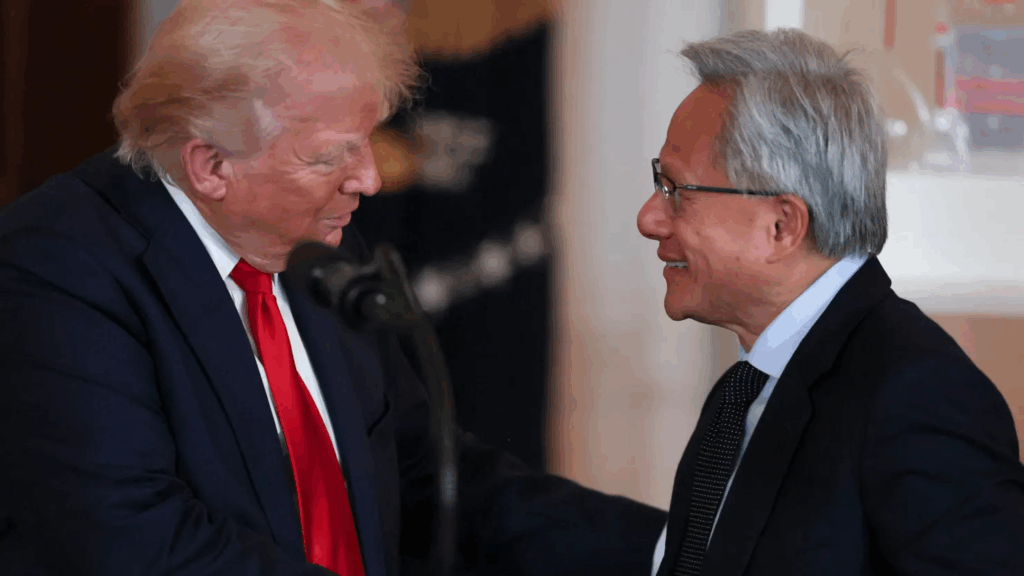
One name that has been doing the rounds in Washington’s corridors of power is none other than the charismatic chief of NVIDIA, Jensen Huang. Moving closer to Donald Trump’s political orbit, he is leveraging every possible channel in Washington to position his company at the center of the global AI race. NVIDIA has a stranglehold on the market for chips needed to build AI systems, controlling roughly 80–90% of the share, and now wants to exert further control by influencing America’s semiconductor policy.
Whether it’s courting Trump and other influential lawmakers or defending export strategies, Huang has become a go-to lobbyist for advancing his company’s interests. It increasingly resembles a quid pro quo relationship, where President Trump can also benefit by cozying up to one of Silicon Valley’s foremost power players.
Exploring the depths of Jensen Huang’s chip diplomacy with the Trump administration
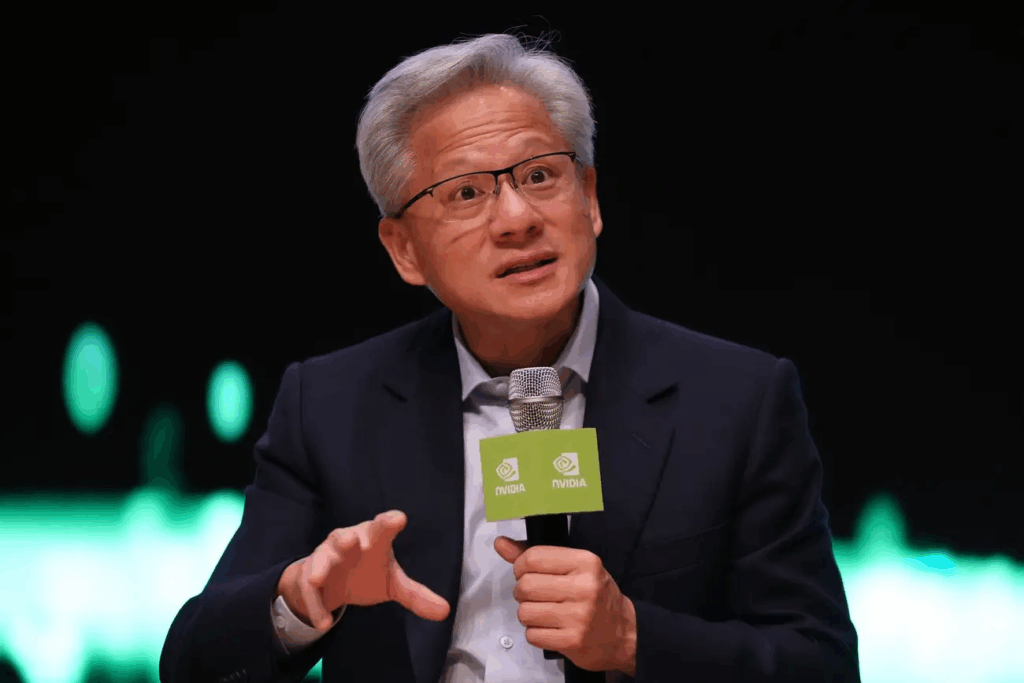
An extremely delicate and complicated business negotiation in April last year marked a significant shift in the power dynamics between the Trump administration and Huang. Commerce Secretary Howard Lutnick invited Huang to Mar-a-Lago as the administration considered restricting NVIDIA’s AI chip exports to China. Reportedly, Huang attended the $1 million-per-seat dinner and urged Trump not to restrict sales, pointing out NVIDIA’s hundreds of billions of dollars in U.S. investments. The lobbying worked as the administration changed course on certain export limits.
Read more: Donald Trump Suing JPMorgan for $5 Billion Could Lead to an Economic Disaster
The relationship rose to further prominence last year when Trump approved the sale of NVIDIA’s H20 AI accelerator, the second-most-powerful China-compliant chip, to China. Furthermore, in May 2025, Huang accompanied Trump on a Middle East trip during which the latter announced semiconductor deals with Saudi Arabia and the United Arab Emirates.
The deal reportedly will allow the UAE to import up to 500,000 advanced NVIDIA AI chips annually. NVIDIA profited massively from this deal; its stock surged, increasing NVIDIA’s CEO’s net worth by an estimated $12 billion in a single day.
“I see my friend is here, Jensen. [Apple CEO] Tim Cook isn’t here, but you are. What a job you’ve done. He’s got 99% of the chip market. That’s not easy to beat. Thank you for the investment. We are proud to have you in our country.” Donald Trump said, praising the NVIDIA head at the Saudi-U.S. Investment Forum last year.
Huang returned the favor to the Trump administration by praising its energy and manufacturing policies for building an environment conducive to AI infrastructure development in the US, at NVIDIA’s Washington, D.C., tech conference in October last year. He further announced his plans to build seven AI supercomputers in partnership with the Department of Energy.
Meanwhile, speaking with Joe Rogan on the JRE podcast, Huang further hailed Donald Trump’s renewed energy policies. “If not for his [Trump’s] pro-growth energy policies, we would not be able to build factories for AI, we’d not be able to build chip factories … none of that stuff would have been possible,” he said.
Trump reverses Biden-era restrictions to allow the AI market to thrive, but challenges still loom for NVIDIA
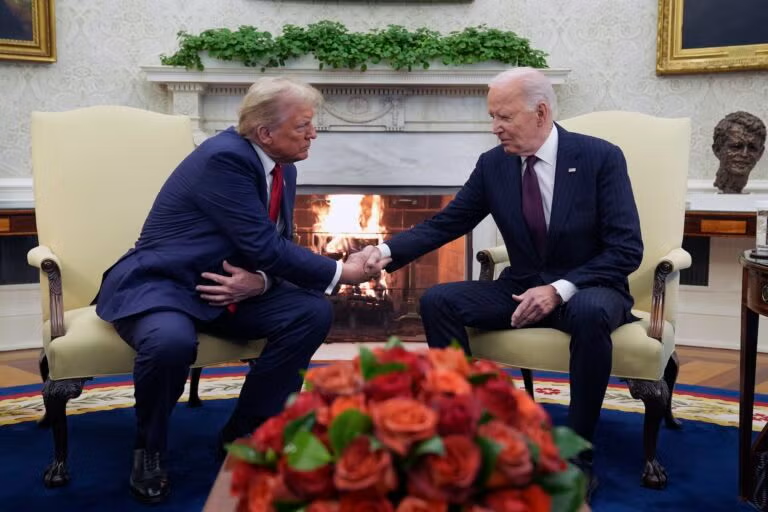
Reportedly, the Biden administration launched an antitrust investigation into NVIDIA in September 2024, looking into allegations that the company abused its dominant control over the AI chips market. However, Trump rolled back several Biden-era restrictions, with a December executive order preventing states from introducing their own AI regulations. This came days after Huang urged lawmakers to oppose state-level AI rules.
Although NVIDIA promised the Trump administration to expand U.S.-based production, its supply chain remains global, as advanced packaging still takes place in Taiwan. The company also faced further challenges as the deal to sell AI chips to Chinese firms has hit a roadblock, as new rules prevent advanced American technology from reaching China’s military.
The company is facing challenges in navigating international markets due to evolving trade rules, export controls, and broader geopolitical tensions. Nevertheless, it remains to be seen if Huang’s access to Washington deepens to influence more favorable policy outcomes and major international deals in his favor.
Also read: NVIDIA CEO Jensen Huang Commends U.S. President Donald Trump for Saving AI Industry
