

The coordinated strikes by the US, under the leadership of Donald Trump, and Israel on Iran had far-reaching implications for the stock market across multiple sectors. The aviation sector has taken a massive hit, with Asian airline stocks plunging amid rising regional instability.
Caught in the crossfire, thousands of passengers remain stranded in airports and hotels across several affected Middle Eastern cities, uncertain about when they will be able to take their next flight home.
The strikes marked the culmination of negotiations breaking down between the US and Iran in early 2026 over Tehran’s nuclear program and broader security concerns. Iran’s retaliatory missile and drone attacks on US and Israel’s military air bases across the Gulf region — including Bahrain, Kuwait, Qatar, Saudi Arabia, the UAE, and Iraq — have further disrupted airspace and commercial flight operations.
Asian aviation shares take a hit due to US-Iran conflict
As per the latest reports, three major airports — Doha in Qatar, and Dubai and Abu Dhabi in the United Arab Emirates — have stopped operations in response to the conflict.
Due to the ongoing conflict, Australia’s Qantas and Hong Kong’s Cathay Pacific are down by 5.4% and 2.8%, respectively. Meanwhile, shares in Japan Airlines fell by 5.6%, and Singapore Airlines is down by 4.5%.

On March 1, Singapore Airlines announced that it had cancelled a total of 16 flights between February 28 and March 7 that were scheduled to operate between Singapore and Dubai. Its budget subsidiary, Scoot, also temporarily suspended flights between Singapore and the Saudi Arabian city of Jeddah.
Asian markets are taking a hit overall. Hong Kong’s Hang Seng Index is down by 1.6%, while Singapore’s Straits Times Index dropped by 1.8%. Japan’s Nikkei 225 fell by 1.4%, according to Reuters.
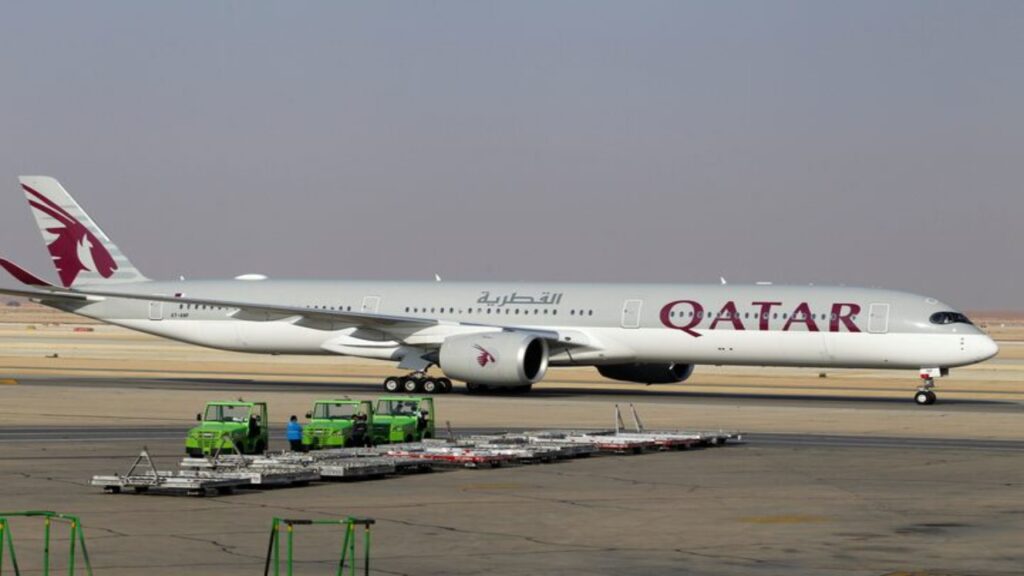
Middle Eastern airspace remains largely closed or heavily restricted, with thousands of flights cancelled. Emirates has extended the suspension of Dubai services, with no confirmed restart date. Middle Eastern carriers such as Qatar Airways and Etihad Airways, along with international airlines such as Lufthansa, have paused departures or suspended flights to the Gulf region.
With travelers stranded at airports and transit hubs worldwide, global aviation analysts are calling this one of the worst disruptions to the sector since the 2020 COVID-19 pandemic. However, military conflicts have wide-ranging consequences, with ripple effects felt far beyond the airline industry.
Related: US Military Reportedly Used Anthropic’s Claude AI in Iran Strikes Hours After Donald Trump’s Ban
Cloud infrastructure hub caught up in airstrike
Reuters reported that an Amazon Web Services (AWS) data center in the United Arab Emirates was impacted in an airstrike. An availability zone in the company’s Middle East (ME-Central-1) region was reportedly hit by “objects,” leading to a temporary power shutdown at the facility.
Local authorities cut power to the center while firefighters worked to bring the fire under control. In another report, Reuters stated that there were connectivity and power issues at facilities in both the UAE and Bahrain amid rising regional hostilities linked to the US-Iran conflict.
The cause of the disruption was not specified by the company, but the timing overlapped with escalating conflict involving Iran, the United States, and their respective allies. Data centers are repositories of vital digital infrastructure relied upon by governments, financial institutions, multinational corporations, and consumer platforms.
“The most valuable corporate infrastructure on earth is now absorbing kinetic damage from a state-level military conflict, and the world’s largest cloud provider is describing missile or drone debris as ‘objects’ because no corporate communications playbook exists for this scenario. This is the first time in history that a major hyperscaler data center has been physically struck during a war,” Shanaka Anslem Perera, an independent geopolitical analyst, stated on X.
Tech companies may now need to take regional stability into account before building or expanding computing facilities.
