


In a major strategic pivot toward a software-defined future, Ford Motor Company unveiled a suite of advanced artificial intelligence and autonomous driving technologies at the 2026 Consumer Electronics Show. The announcements, led by Chief EV, Digital, and Design Officer Doug Field, represent a shift away from generic tech integrations toward a proprietary “vehicle brain” designed to provide deep, context-aware utility for both electric- and internal-combustion-vehicle owners.
At the same time, the automobile giant is preparing to launch their very own line of vehicles that is equipped with “eyes-off” technology. According to the latest reports, Ford Motor Company plans to roll out its AI driving assistant and hands-free technology in the coming days.
Ford is preparing to launch Google-powered AI driving assistant
As the AI tech industry continues to transcend different niches, the automobile sector seems to be joining the bandwagon as well. Spearheaded by Ford Motor Company, the automaker is preparing to launch its very own AI driving assistant, as per a Business Insider report.
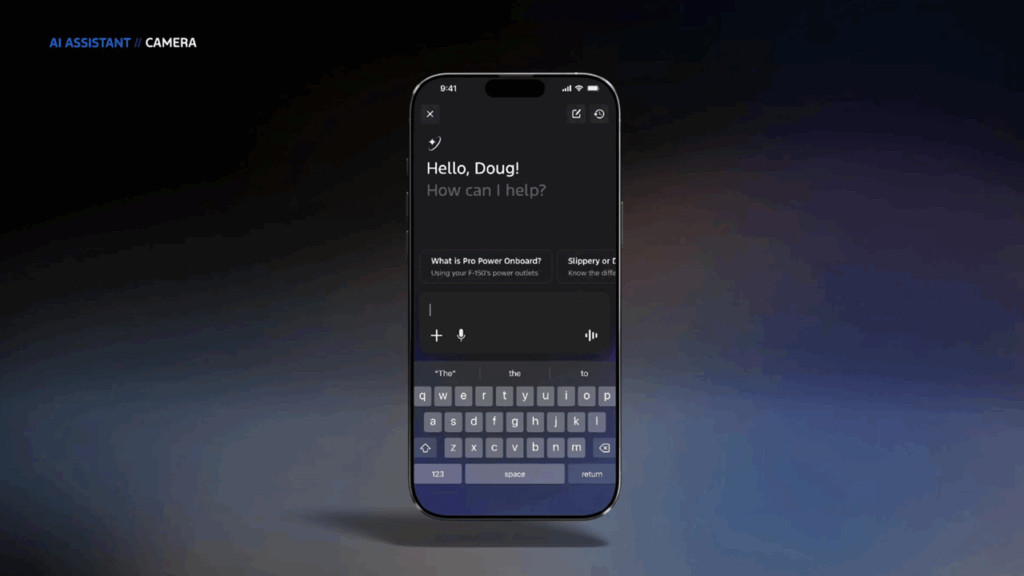
The centerpiece of this new digital ecosystem is a personalized AI driving companion. Developed in collaboration with Google Cloud and utilizing sophisticated large language models, this assistant is designed to go beyond the capabilities of traditional voice commands. Unlike standard systems with basic functions like AC control or music, Ford’s new AI assistant possesses a holistic understanding of the vehicle’s physical dimensions and mechanical health.
For instance, a driver at a retail outlet can take a photograph of a large item and ask the assistant if it will fit in their vehicle. The AI will then calculate the object’s volume against the measurements of the cargo area to answer the query. The AI assistant will also monitor real-time diagnostics by translating sensor data into natural language to advise drivers on tire pressure, oil life, and maintenance schedules.
Ford is planning to roll out this new product in a phase-wise manner. The experience will first debut in early 2026 through a redesigned Ford and Lincoln smartphone app, reaching approximately eight million customers. This mobile-first approach allows for rapid iterative updates before the technology is natively embedded into vehicle hardware. By 2027, the AI assistant will move directly into the cabin, beginning with Ford’s new “Universal Electric Vehicle” (UEV) platform. This platform is expected to underpin an affordable midsize electric pickup truck with a target price of around $30,000.
Related: Apple CarPlay Ultra Sparks Concern as Ford CEO Jim Farley Weighs In
Ford’s AI assistant launch will be accompanied by hands-free driving tech
Parallel to the AI assistant, Ford is significantly advancing its BlueCruise hands-free driving technology. According to a report by TechCrunch, the company unveiled a new hardware and software stack that reduces manufacturing costs by 30%. Simultaneously, it offers more powerful centralized computing. This vertical integration is not only cost-effective but also enables more frequent and robust over-the-air updates.

This unified architecture aims to achieve the third level of “eyes-off, hands-off” driving autonomy. Ford is expected to debut the same in their forthcoming models in 2028. Although current versions of BlueCruise allow hands-free driving on pre-mapped highways, they still require the driver to remain attentive at all times. The milestone set for 2028 would allow drivers to legally divert their gaze from the road during highway travel, provided they remain available to intervene if the system requests it.
By developing these systems in-house rather than relying on third-party “black box” solutions, Ford aims to create a more seamless and humanized experience. Doug Field emphasized that the goal is not just to add more screens, but to provide a digital companion that understands the physics of the vehicle and the needs of the driver.
As the automotive industry enters an era defined by artificial intelligence, Ford’s focus on integrating practical utility with advanced autonomy suggests a commitment to making sophisticated technology accessible to a broader segment of the driving public.
Also Read: Elon Musk’s xAI Gets $20 Billion Support For Series E Funding
