

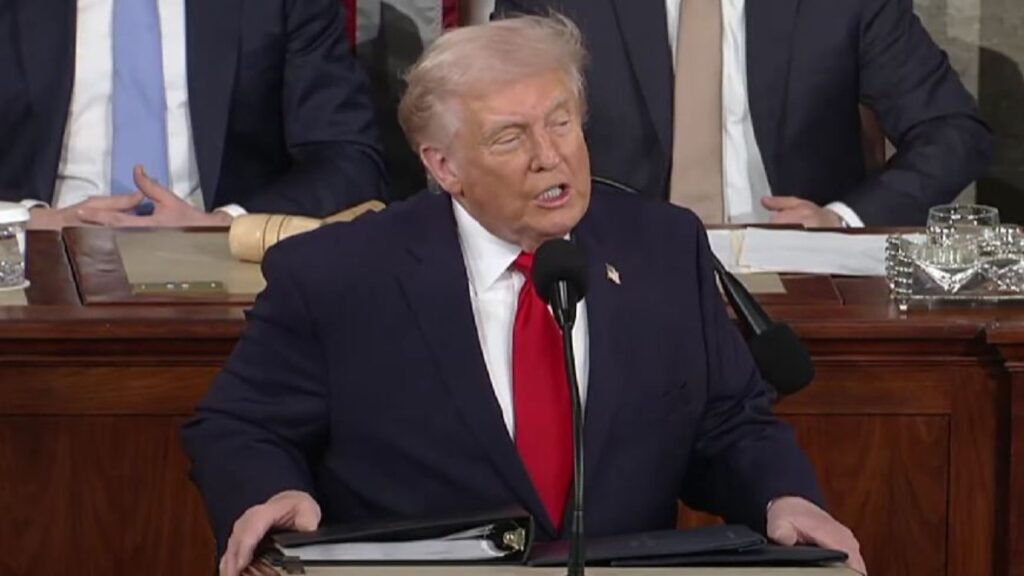
In the State of the Union Address last month, U.S. President Donald Trump announced the Ratepayer Protection Pledge, which aims to prevent electricity bills from rising due to the excessive power demands of data centers powering the new AI ecosystem.
Now, to make good on that promise, he invited top executives from major tech companies to sign the pledge on March 4, 2026, as he tries to quell public concerns about the rapid AI boom.
Previously, the CEOs of major AI companies like Anthropic and OpenAI had stated that the burgeoning AI landscape would be energy-intensive. With this recent move, the U.S. government has sought to exert greater oversight over AI companies while also encouraging investments in the sector. So, what are the salient features of the pledge that Big Tech companies agreed to comply with?
What is Donald Trump’s Ratepayer Protection Pledge all about?
At the signing of the pledge, the top technology leaders who were in the room included Google President Ruth Porat, Microsoft President Brad Smith, Meta President Dina Powell McCormick, Amazon Web Services CEO Matt Garman, Oracle executive Clay Magouyrk, OpenAI COO Brad Lightcap, and Gwynne Shotwell, the President of SpaceX.
The pledge included five commitments that the companies needed to adhere to, including paying for the power generation and electricity required for their AI projects, including building new power plants.
The companies also had to cover the costs of upgrading transmission and distribution infrastructure required to power their data centers. Furthermore, they had to work with utilities and regulators to negotiate rate agreements.
The other two commitments included supporting the communities where data centers are built through job creation and workforce training programs, and developing backup power supplies for local grids during emergencies.
“They’re going to be making their own electricity,” Trump assured, adding, “They’re not going to be taking from the grid.”
Trump sees the rapidly developing technology as a means to attract investment and bolster the country’s economy and military prowess. The initiative comes ahead of the U.S. midterm elections, where rising energy costs are a key voter issue.
Related: Can Donald Trump’s New AI Pledge Lower Electric Bills for Americans?
However, according to media reports, some energy experts have expressed doubts about the enforcement mechanisms regarding power generation for these AI systems. The deal is unlikely to be enforceable at the federal level, placing the onus on states to regulate it.
Furthermore, AP quoted Lena Moffitt, executive director of Evergreen Action, an environmental group, was saying that there were no officially approved enforcement mechanisms.
“Now that energy prices have skyrocketed due to his corporate polluter-first policies, Trump is trying to cover up his mistakes with a photo op,” she stated.
Meanwhile, some lobbying groups for the power industry have welcomed Trump’s pledge, saying it promotes innovation while keeping the energy needs of the American public affordable.
Notably, the pledge is a voluntary agreement by tech companies and not a bill passed by the U.S. Congress. With rising electricity prices one of the top concerns of the American public, it remains to be seen what other proactive measures governments will take to keep these AI firms on a tight leash.
