

In a striking divergence from his “customer-obsessed” success at Amazon, Jeff Bezos’ aerospace venture, Blue Origin, stands as the billionaire’s most expensive and longest-running financial enigma. The retail mogul has dedicated over two decades of operation and an estimated personal investment exceeding $10 billion.
However, Blue Origin remains a massive capital sink that has yet to demonstrate a sustainable path to profitability. At the moment, Blue Origin is undergoing a radical strategic pivot, effectively sidelining its most visible achievement, that is space tourism, to double down on a high-stakes gamble for orbital and lunar dominance.
Jeff Bezos’ Blue Origin announces New Shepard hiatus
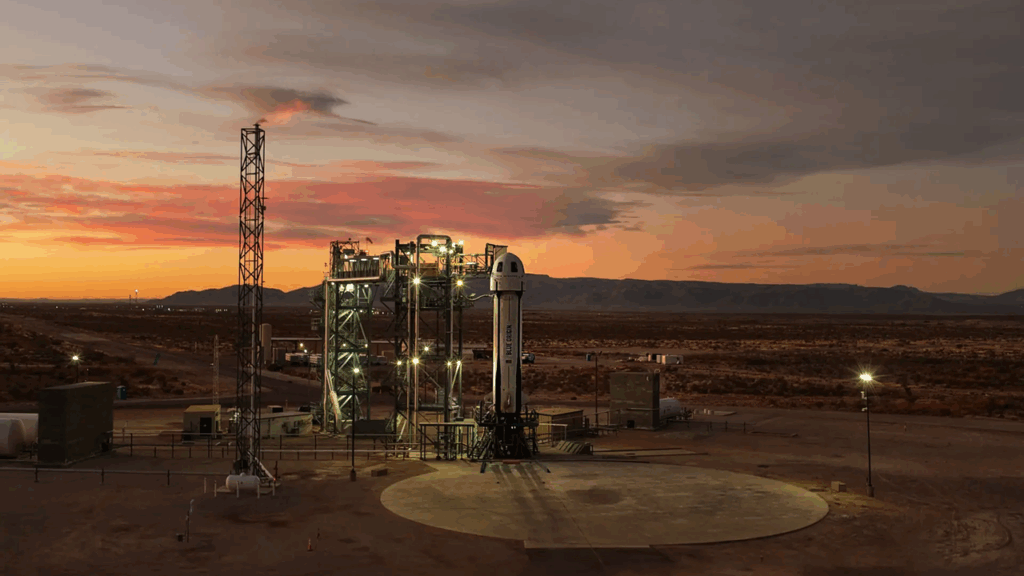
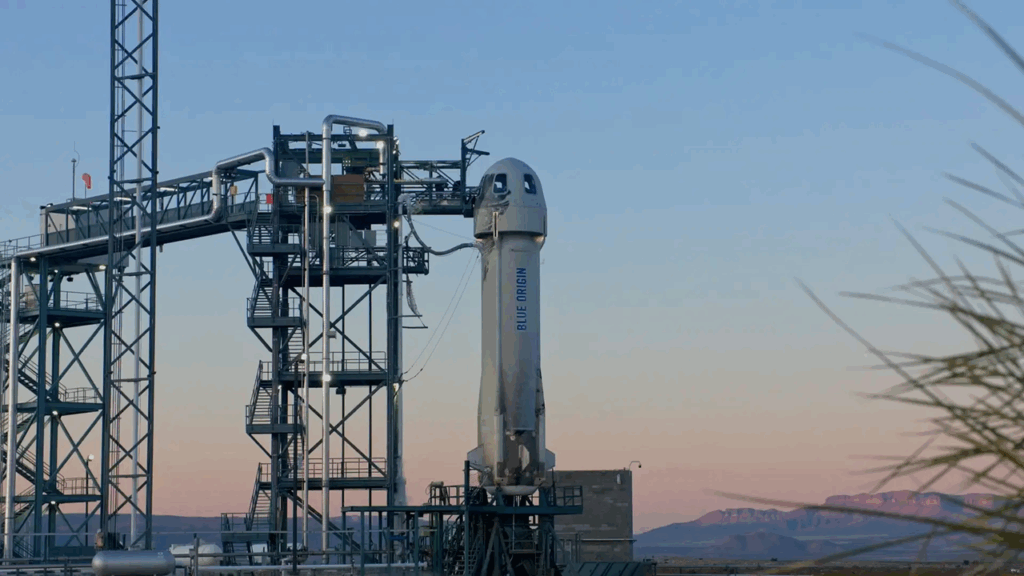
In a Blue Origin press statement, it has been stated that the company will pause all New Shepard flights for “no less than two years.” For a significant period of time, the suborbital New Shepard rocket was the face of Blue Origin. It had famously carried Amazon founder Jeff Bezos himself and a rotating cast of celebrities to the edge of space.
However, in a move that signals the harsh economic reality of “joyrides,” the company announced on January 30 that it would pause all New Shepard flights for a minimum of two years. In the past, the program successfully carried 98 humans above the Kármán line across 38 missions. However, it could not make major profits at the time being. Industry analysts suggest the revenue from million-dollar tickets was a drop in the ocean compared to the roughly $1 billion annual payroll for Blue Origin’s 10,000-strong workforce.
The current focus has shifted entirely to New Glenn, the massive orbital rocket named after John Glenn. This is where Bezos’ “expensive bet” meets its moment of truth, and where the company has faced its most grueling technical hurdles.
As mentioned in a GeekWire report, central to these challenges is the BE-4 engine, a powerhouse fueled by liquefied natural gas (LNG). The road to perfecting the BE-4 was marred by years of delays and a high-profile explosion during a June 2023 acceptance test that destroyed a flight engine and heavily damaged test infrastructure. These setbacks forced a methodical redesign to ensure the engine could meet the demanding 550,000 lbf thrust requirements for both New Glenn and United Launch Alliance’s Vulcan rocket.
Related: Apple Reportedly in Talks with Elon Musk to Add “Revolutionary” Feature to iPhones
Blue Origin’s technical hurdles since inception
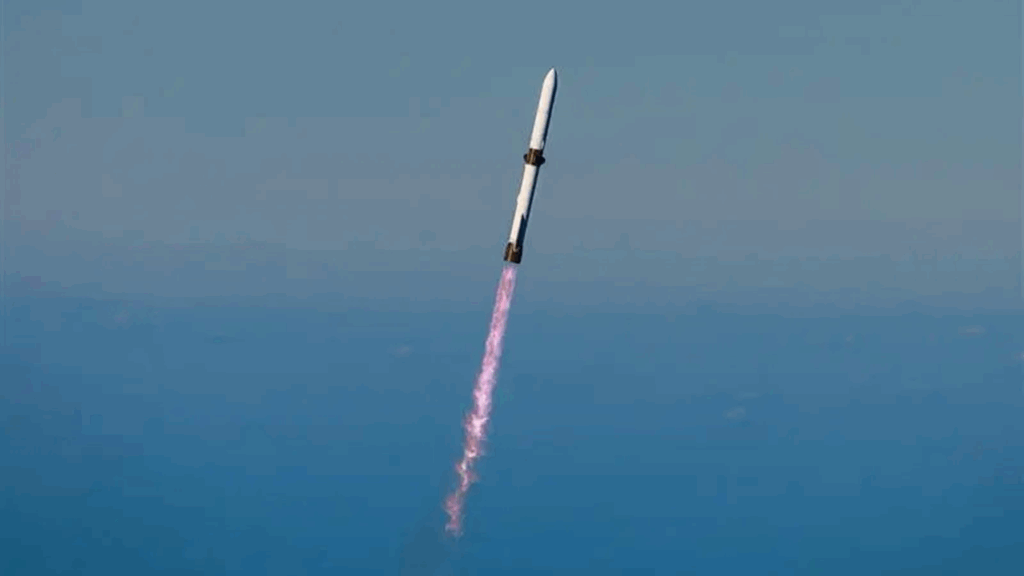
Beyond the engines, the company has struggled with the complexities of reusability. According to the company’s press statement, while New Glenn’s inaugural flight on January 16, 2025, successfully reached orbit, the first-stage booster was lost during descent. It wasn’t until the second mission (NG-2) in November 2025 that Blue Origin successfully landed the booster on the drone ship Jacklyn. As of February 2026, the company is preparing for the NG-3 mission, which aims to achieve the first-ever orbital re-flight of a New Glenn booster. Source: New Glenn Reaches Orbit on NG-1 Mission
Blue Origin’s financial survival is now increasingly tethered to the moon. Under CEO Dave Limp, the company is prioritizing the Blue Moon human lunar lander. As reported by CBS, having secured a $3.4 billion contract from NASA for the Artemis V mission, Blue Origin is currently refining its robotic cargo lander to meet stringent “human landing system” requirements.
The contract requires an uncrewed demonstration mission to the lunar surface before the crewed mission slated for 2029. This shift aligns with a broader industry trend moving from suborbital tourism to high-value deep-space contracts, which offer higher long-term revenue potential.
Blue Origin remains the ultimate “long-term” play. Jeff Bezos has predicted quite a while ago that the company will one day be bigger than Amazon itself. Bezos envisions a future where millions of people live and work in space. Until then, it remains a testament to his appetite for risk, a multi-billion-dollar bet on a future that is still very much in the hangar, struggling to overcome the high-cost physics of orbit.
