

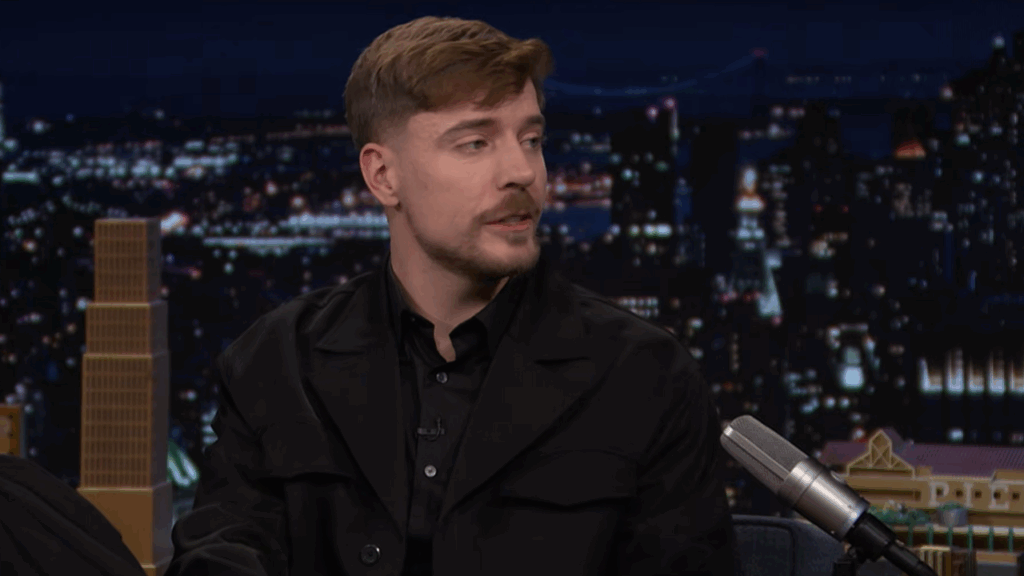
In the modern theater of digital entrepreneurship, few figures loom as large as Jimmy Donaldson, known globally as MrBeast. With a subscriber base that eclipses the populations of entire continents and a commercial empire spanning from fast food to consumer packaged goods, Donaldson is frequently cited as the first “billionaire creator.”
However, a startling revelation this week offers a rare glimpse into the precarious financial architecture of the creator economy: the world’s most successful YouTuber recently had to borrow money from his mother to cover basic personal expenses.
MrBeast talks about net worth and personal finances
According to a report by Luxury Launches, Donaldson admitted in a candid interview with The Wall Street Journal on his operational model that despite his company’s ten-figure valuation, his personal liquidity is often nonexistent. “I’m probably the only person in the world who has a billion-dollar company but had to ask his mom for money to buy a sandwich,” Donaldson remarked. This admission highlights the “all-in” philosophy that has defined his rise, where every cent of revenue is immediately cannibalized by the astronomical production costs of his next venture.
For the casual observer, the notion of a mogul lacking liquid capital seems counterintuitive. Yet, within the context of Donaldson’s specific brand of “spectacle philanthropy” and hyper-engineered content, the math begins to align. The production value of a single MrBeast video now rivals that of a mid-budget Hollywood feature, often exceeding $5 million per upload.
When coupled with the aggressive scaling of Feastables, which has recently undergone a massive global retail expansion. The result is a business that is “asset-heavy and cash-poor.” Donaldson is not merely a content creator; he is the head of a high-burn-rate startup that requires constant infusions of its own capital to maintain its velocity.
As shared by Mstrategic choice to remain illiquid is a hallmark of Donaldson’s long-term vision. Unlike traditional celebrities who siphon off wealth into diversified portfolios or luxury lifestyles, Donaldson has famously eschewed the trappings of the “ultra-rich.” He continues to live in a relatively modest home in North Carolina and maintains a wardrobe that belies his financial status.
Related: Jeff Bezos’ Most Expensive Bet That Still Makes No Money
MrBeast’s wealth management is a valuable case study on finance

By funneling his earnings back into the “Beast” ecosystem, he is effectively betting on the compounding power of his own brand. In his view, a dollar spent on a stock market index is a dollar wasted; it is far more productive when spent on a video that generates fifty million new views and further cements his platform’s dominance.
However, the “sandwich loan” from his mother serves as a poignant metaphor for the fragility of the creator-led conglomerate. It underscores a fundamental truth about modern wealth: valuation is not equivalent to cash flow. While investors and private equity firms may value the MrBeast brand at more than $1.5 billion, that value remains locked in equity. For Donaldson, the mission to “help as many people as possible” through his philanthropic efforts necessitates a level of reinvestment that leaves little room for personal financial padding.
As the creator economy matures, the MrBeast model will likely be studied as either the ultimate blueprint for brand-building or a cautionary tale about the risks of over-leverage. For now, Donaldson remains undeterred. His willingness to rely on familial support for daily necessities while overseeing a global empire suggests a man entirely uncoupled from the ego of traditional wealth. In the world of MrBeast, being “broke” is simply the price of admission for building the future of entertainment.
