

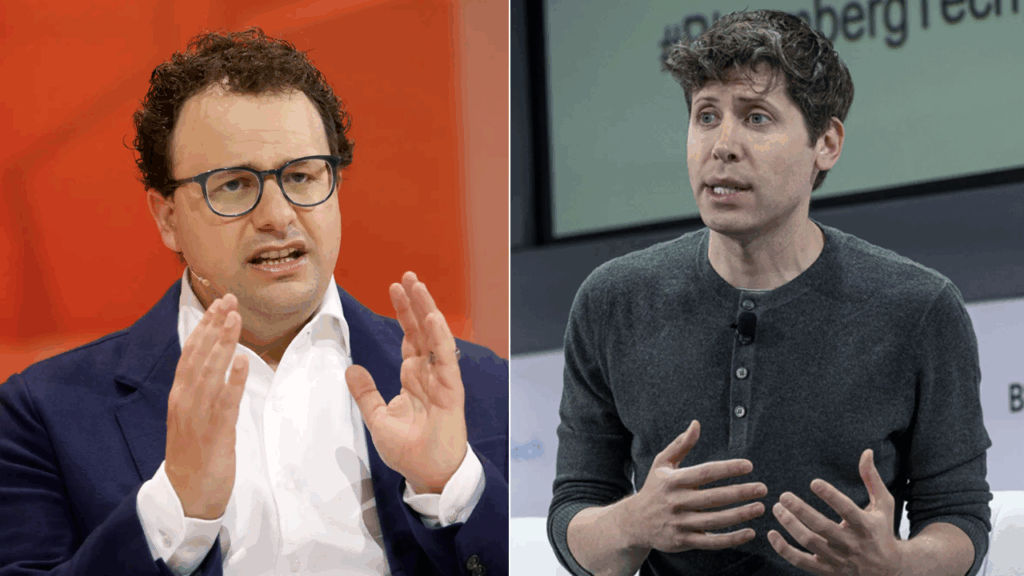
For decades, the Super Bowl commercial breaks were the exclusive playground of automotive giants, beverage conglomerates, and established consumer brands. However, the February 2026 championship game marked a definitive cultural shift as the burgeoning rivalry between OpenAI and Anthropic moved from technical white papers to a high-stakes televised “food fight.”
According to Fortune, this shift signals that artificial intelligence has officially entered its “trash talk” era, where the battle for market dominance is no longer fought over benchmarks alone, but over brand identity and consumer trust. The catalyst for this public confrontation was Anthropic’s aggressive debut on the Super Bowl stage.
The startup behind the Claude chatbot utilized its airtime to launch a direct, if implicitly framed, assault on OpenAI’s recent decision to introduce advertising within ChatGPT. The Anthropic spots depicted a series of unsettling scenarios in which AI assistants—personified as stilted, overly effusive humans—interrupted deeply personal moments, such as therapy sessions or fitness coaching, to hawk irrelevant products like dating apps or shoe insoles.
The campaign’s tagline, “Ads are coming to AI. But not to Claude,” was a clear rebuke of OpenAI CEO Sam Altman’s pivot toward an ad-supported model for ChatGPT’s free and “Go” tiers. While Anthropic co-founder Daniela Amodei maintained in a post-game interview that the ads were merely a reflection of the company’s values, the industry’s reaction was far less neutral.
Fortune reports that the campaign “got under the skin” of OpenAI’s leadership, prompting a sharp response from Altman on social media. Altman characterized the ads as “clearly dishonest,” arguing that OpenAI’s move to include ads is a necessary step to bring AI to billions of people who cannot afford premium subscriptions.
OpenAI, for its part, chose to counter with “vibes and ambition” rather than mud-slinging. Its own Super Bowl spot showcased its Codex tool, following the journey of a creator from childhood imagination to adult construction. This strategic divergence highlights the two distinct paths the companies are taking: OpenAI as the expansive, “AI for everyone” utility, and Anthropic as the “kinder, gentler,” premium alternative focused on deep thinking and work without commercial intrusion.
Related: Sam Altman Opens Up About Balancing the Pressure of OpenAI With Family Life
The OpenAI-Anthropic clash could indicate the Agentic AI emergence
Beyond the immediate “trash talk,” analysts suggest the Super Bowl clash is the opening salvo in a broader “AI Agent War.” Both companies are racing to develop autonomous systems—agents—that can handle complex tasks on behalf of users.
Fortune notes that the stakes are particularly high because whoever wins the “agentic” battle will likely become the primary interface for a user’s digital life. Anthropic’s bet is that consumers will refuse to delegate their most intimate tasks to a “shill” that might prioritize sponsored outcomes over helpful ones.
However, the efficacy of these million-dollar salvos remains a subject of debate. While marketing expert Scott Galloway suggested that Anthropic’s tactical strike could make the company more valuable than OpenAI by claiming the moral high ground, other data indicate that the general public remains skeptical of generative AI’s utility.
As the 2026 “AI Bowl” concludes, the industry is left with a fractured landscape: one side betting on the democratization of intelligence through traditional ad-tech, and the other wagering that privacy and purity are the ultimate luxury goods in the age of automation.
Also Read: AI Could Help a Basement Entrepreneur Become the World’s First Trillionaire, Says Mark Cuban
