

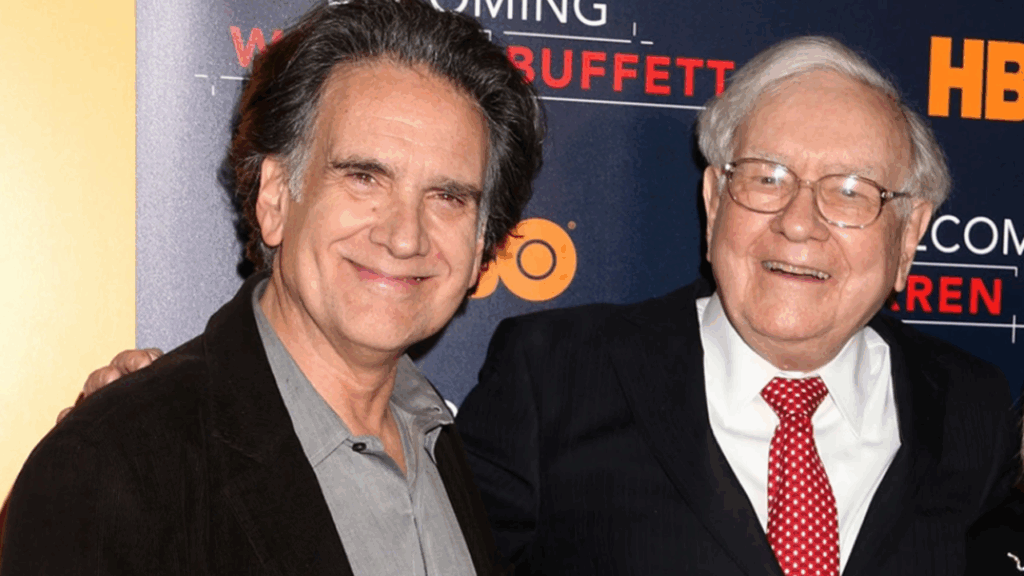
In an era where the scions of the ultra-wealthy are frequently defined by conspicuous consumption and the relentless scrutiny of the public eye, the domestic environment orchestrated by Warren Buffett stands as a profound anomaly.
A recently detailed retrospective from Peter Buffett, the youngest son of the renowned “Oracle of Omaha,” provides a rare perspective on an upbringing characterized by such meticulous normalcy that he remained entirely oblivious to his father’s vast capital reserves until he reached the threshold of adulthood.
Warren Buffett’s son Peter talks about his father’s role in childhood
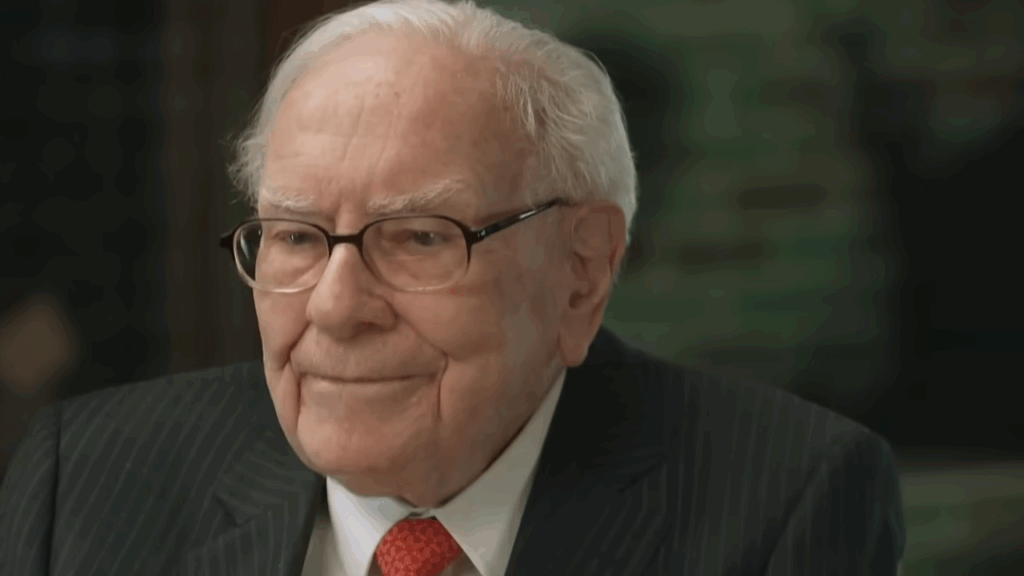
According to a report by Fortune, Peter Buffett was unaware of the fact that his father, the veteran investment guru Warren Buffett, was a billionaire. Peter Buffett, who has since forged a distinguished career as a composer and philanthropist, describes a childhood situated within the unassuming walls of a mid-century Omaha residence.
Warren Buffett famously acquired the family home in 1958 for $31,500, a property he retains to this day, and insisted that his children navigate the public school system and adhere to modest allowances. To Peter and his siblings, their father was not a titan of industry but a predictable, professional figure who commuted daily, returned for family meals, and spent his evenings immersed in financial periodicals.
The revelation of the family’s true economic standing did not arrive through the acquisition of luxury assets or a transition to a more palatial estate. Rather, the truth was delivered via the detached medium of print. Peter recalls being roughly 20 years of age when he encountered a list of the most affluent individuals in the United States and discovered his father’s name prominently featured. Even then, the information appeared incongruous, as it failed to align with the disciplined, frugal reality of their private lives.
This concealment was not a byproduct of secrecy, but rather a deliberate pedagogical strategy employed by Warren Buffett. The patriarch has long advocated for providing his children with enough resources to pursue any endeavor, but not so much that they are relieved of the necessity to do anything at all.
By insulating his children from the psychological gravity of multi-billion-dollar wealth, he ensured they developed independent identities and a robust work ethic. Peter observes that while the Buffett surname eventually carried significant weight, the bedrock of his character was established on the premise that he would have to navigate the world on his own merits.
Related: Greg Abel Succeeds Warren Buffett As New CEO Of Berkshire Hathaway
The Buffett duo is an inspiring approach to parenting
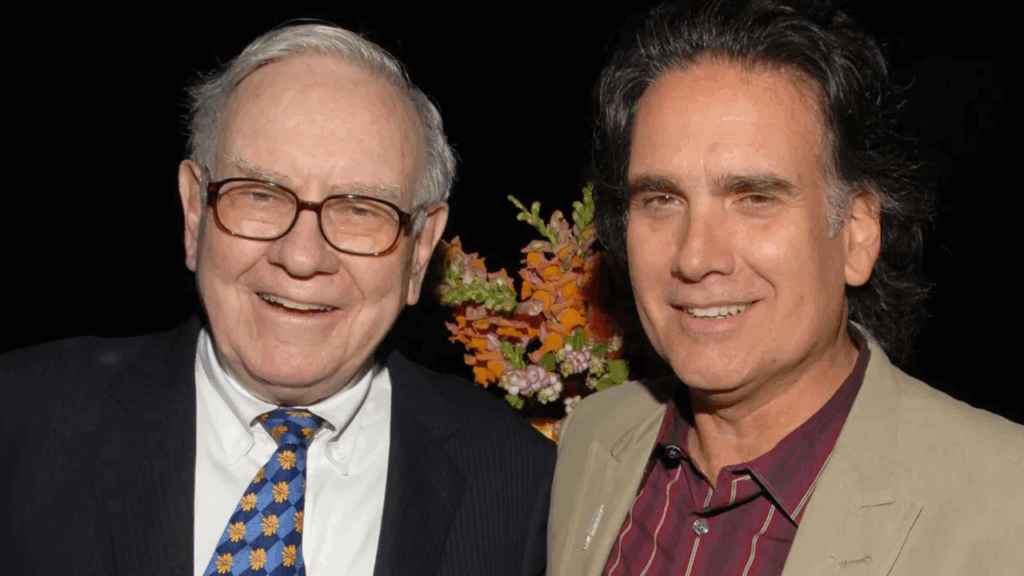
The narrative gives way to Warren Buffett’s broader philosophical opposition to dynastic wealth and the “silver spoon” syndrome. Having pledged to divest more than 99% of his fortune to philanthropic ventures, he essentially treated his children as stewards of their own potential rather than beneficiaries of a passive inheritance. For Peter, this resulted in a structured endowment intended to facilitate his musical ambitions—a gift of opportunity rather than a guarantee of leisure.
In a broader sense, Peter Buffett’s experience serves as a compelling case study in the preservation of values amidst extreme success. By the time the scale of his father’s wealth was made manifest, Peter had already synthesized a worldview that did not rely on financial status for validation.
The discovery was treated less as a life-altering windfall and more as a peripheral data point regarding a man he primarily knew as a father. This legacy of intentional parenting and “stealth wealth” remains a singular chapter in the history of the American elite, suggesting that the most enduring inheritance a billionaire can bestow is the freedom to be ordinary.
