

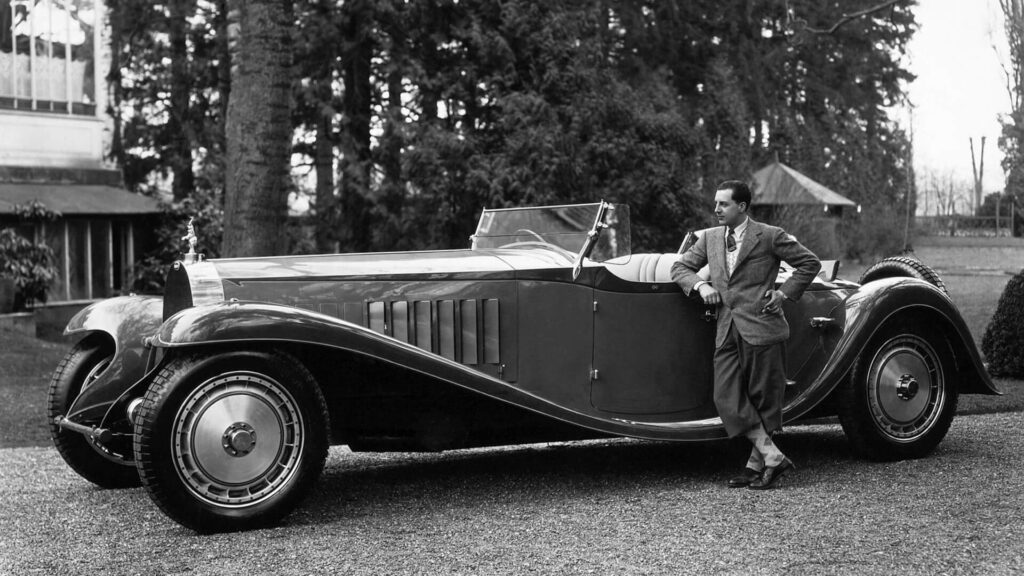
There are few figures in automotive history as meticulous as Ettore Bugatti. The founder of Bugatti believed perfection was the be-all and end-all, and if a supplier could not meet his vision, he would build the solution from scratch himself.
That knack for perfection once extended to the legendary Parisian house Hermès, which crafted bridles and horse equipment for European nobility. But even the heritage leather atelier’s craftsmanship could not meet Bugatti’s exacting standards.
Ettore Bugatti folklore reveals a curious story about his dismissal of Hermès’ craftsmanship
Decades before the two brands formally collaborated on the Veyron Fbg par Hermès in 2008, Bugatti was not one to be overawed by the saddler’s craft. According to a story narrated by French journalist Frédéric Loiseau, who visited Bugatti’s estate in Molsheim in 1928, it wasn’t just the car factory that mesmerized him, but the precision engineering that extended to the stables as well.
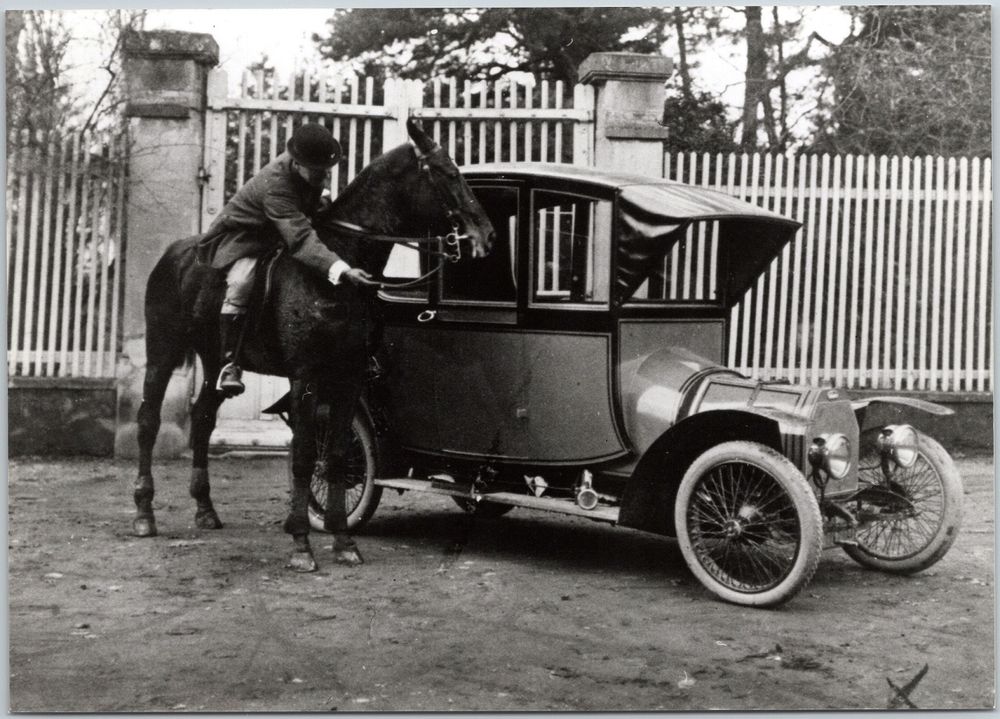
The Molsheim estate housed stables in the 1920s and 1930s that reflected the same design precision seen in Bugatti’s cars. The French journalist’s observations, preserved in the monograph Horseman Bugatti by historian Andres Furger, described stall doors finished with polished metal plates and carefully treated wood.
The layout felt architectural, composed with intention rather than practicality alone. Even the harness room carried an air of ceremony, filled with the scent of fine leather and rare woods. Loiseau recounts that he was led into the harness room and saw harnesses stamped with an oval mark reading “Sellerie Bugatti,” and that is when he asked if Bugatti had entered the saddle trade.
Bugatti answered with confidence that Hermès couldn’t deliver exactly what he wanted; thus, he established his own workshop by drawing a blueprint and handing it to his workers, who executed his wishes better than the storied French saddler.
It was no symbolic gesture. Besides the automobile factory, for which Bugatti is known, there was a fully operational in-house leather workshop embedded within the Molsheim property. Reportedly, saddlers sewed harnesses and suitcases alongside mechanics assembling engines.
Related: Exploring $722 Billion Worth Elon Musk’s Luxurious Car Collection
Furthermore, roughly two dozen harness sets were produced for a stable that supported around 30 horse-drawn vehicles. The workshop was overseen by a perfectionist who allowed no margin for error in engineering or saddlery.
For Ettore Bugatti, rejecting Hermès could be seen as blind confidence in his own abilities — a maverick for whom perfection could not be purchased; it had to be designed and built under his authority.
Also read: Exploring $115 Billion Worth Bill Gates’ Luxurious Car Collection
